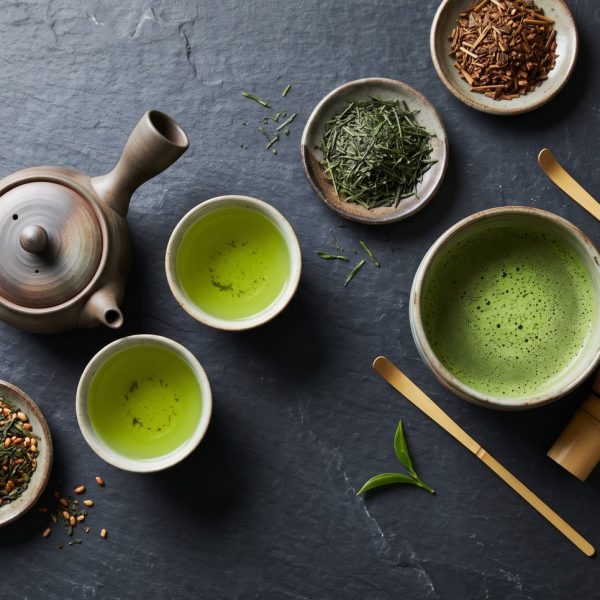
The first time I tasted good sencha, brewed properly in a small clay pot, it barely resembled the bitter green tea I had grown up with. It was sweet, almost savoury, with a fresh smell of cut grass and seaweed. That cup sent me down a long and happy path through Japanese green tea, a category far richer than the single tin on most supermarket shelves suggests.
Japan produces almost exclusively green tea, and its growers have spent centuries refining how leaves are shaded, steamed, rolled and dried. Those choices create distinct styles, and once you know the main ones, buying and brewing becomes much easier.
Why Japanese Green Tea Tastes Different
Most Chinese green teas are pan fired, which gives them a toasty, nutty character. Japanese teas are usually steamed shortly after picking. Steaming stops oxidation quickly and preserves the vivid colour and the marine, vegetal flavour that people associate with Japan. Shading the plants before harvest is the other big lever. Less sunlight means more chlorophyll and more L-theanine, the amino acid behind that rounded, brothy sweetness known as umami.
For a deeper look at the history and regional traditions, the Wikipedia entry on Japanese tea is a thorough and well sourced overview.
The Main Types of Green Tea From Japan
Sencha is the everyday tea of Japan and accounts for most of the country's production. The leaves grow in full sun, are steamed, then rolled into fine needles. Light steaming (asamushi) gives a clear, delicate cup, while deep steaming (fukamushi) produces a cloudier, richer and less astringent brew. If you are new to sencha tea, a fukamushi style is often the more forgiving place to start.
Gyokuro is shaded for around three weeks before harvest. The result is intensely sweet and savoury, with very little bitterness when brewed at low temperatures. It is one of the most prized teas in Japan and priced accordingly.
Kabusecha sits between the two. It is shaded for a shorter period, usually about a week, giving some of gyokuro's sweetness at a gentler price.
Matcha begins as tencha, a shaded leaf that is steamed and dried flat without rolling. The stems and veins are removed and the leaf is stone ground into fine powder. Because you whisk and drink the whole leaf, matcha delivers a fuller flavour and more caffeine than steeped tea.
Hojicha is green tea roasted over high heat until the leaves turn reddish brown. It is low in bitterness, lower in caffeine and has a comforting, toasty aroma, which makes it a popular evening cup.
Genmaicha blends green tea with toasted brown rice. It was once a thrifty way to stretch expensive tea, and today it is loved for its popcorn like warmth.
How to Brew Green Tea the Japanese Way
The single most common mistake is water that is too hot. Boiling water extracts bitter catechins quickly and flattens the sweetness. Knowing how to brew green tea well mostly comes down to temperature and time.
For sencha, use water around 70 to 80°C and steep for about one minute. For gyokuro, go much cooler, around 50 to 60°C, with a small amount of water and a longer steep of up to two minutes. Hojicha and genmaicha are happy with hotter water, close to 90°C, for 30 seconds to a minute. Most Japanese teas can be infused two or three times, with shorter steeps after the first.
A kyusu, the traditional side handled teapot, has a fine built in strainer that copes well with small, broken sencha leaves. It is not essential, but it does make the process tidier.
Reading Labels and Choosing Well
Look for the harvest. Shincha, or ichibancha, is the first flush of spring and generally the sweetest and most aromatic. Later harvests are cheaper and better suited to everyday drinking or cooking. Region matters too: Shizuoka, Kagoshima and Uji in Kyoto are names you will see often.
Labels can be confusing when they move between languages, and many of the best producers sell with only Japanese packaging. Terms such as fukamushi or kabuse rarely have tidy English equivalents, which is a good illustration of why careful Japanese to English translation matters for shops importing directly. When comparing loose leaf options more generally, this guide to choosing premium loose leaf tea worth paying for offers sensible checks on freshness, leaf quality and storage.
Store your tea in an airtight, opaque container away from heat, and finish an opened bag within a couple of months. Green tea fades faster than black tea.
Finding Your Favourite
The best way to learn is to taste side by side. Buy small amounts of sencha, hojicha and genmaicha, brew them on the same afternoon and notice how differently each one behaves. Enthusiasts at r/tea on Reddit are generous with recommendations and brewing tips if you want to compare notes. Before long, the tin of anonymous green tea at the back of the cupboard will feel like a distant memory.