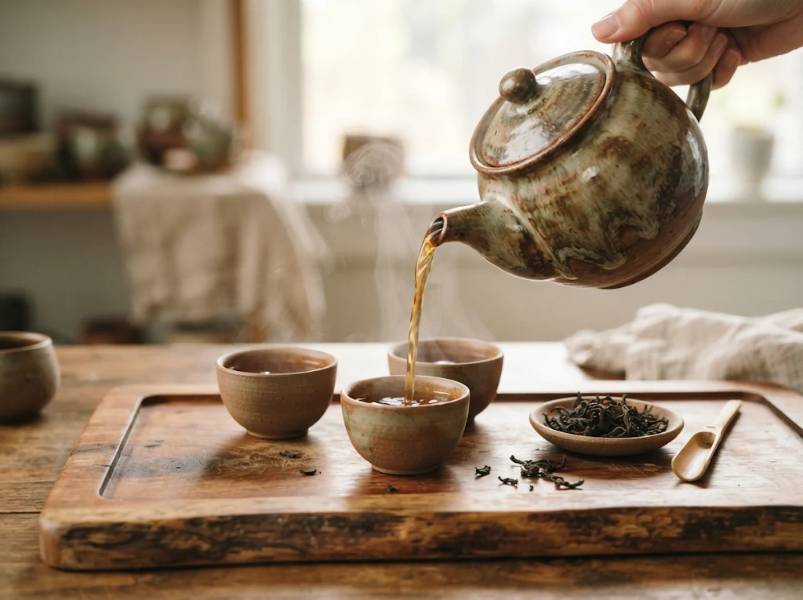
Tea is the second most consumed drink in the world after water, and it comes in a dazzling range of flavors. For a beginner, the shelf at a tea shop can look confusing. A few simple ideas about types, temperature and time make it much easier to enjoy a good cup.
All true teas come from one plant
Green, black, oolong, white and pu erh teas all come from the leaves of the Camellia sinensis plant. The differences come from processing, such as drying, rolling and oxidation.
Oxidation is the main factor that shapes color and taste.
Green tea
Green tea is lightly processed to keep leaves fresh and grassy. Flavors range from sweet and nutty to vegetal and marine.
Use water below boiling, around 75 to 80 degrees Celsius, to avoid bitterness.
Black tea
Black tea is fully oxidized, which gives dark leaves and bold flavors such as malt, honey and spice. It suits milk and sugar if you like.
Use water near boiling and steep for three to five minutes.
Oolong tea
Oolong is partly oxidized, which places it between green and black. It can taste floral, fruity or roasted.
Use hot water around 90 to 95 degrees and brew several short infusions.
White tea
White tea is made from young buds and leaves with minimal processing. It tastes delicate, sweet and soft.
Use water around 80 degrees and steep for a little longer.
Pu erh and dark teas
These teas are fermented and aged, giving earthy and deep flavors. They are often pressed into cakes.
Rinse the leaves briefly before the first infusion.
Herbal infusions
Chamomile, mint, rooibos and hibiscus are not made from the tea plant, so they are called infusions. They are usually caffeine free.
Steep them with boiling water for five to ten minutes.
Start with loose leaf
Loose leaves have more room to expand and usually taste better than dust in bags. They can be brewed more than once.
Use a strainer, infuser or small teapot.
The right amount
A common starting point is one teaspoon of leaves per cup, or about two to three grams. Adjust to taste.
Use a kitchen scale for consistent results.
Water quality
Tea is mostly water, so choose fresh, clean water without strong tastes. Filtered water often gives the best flavor.
Do not reboil water repeatedly.
Control temperature
Delicate teas burn in boiling water. A thermometer or kettle with settings helps.
Let boiled water rest for a minute or two for green tea.
Time your steeping
Follow the suggested time on the package and then adjust. Longer steeping brings more bitterness and astringency.
Remove the leaves when the time is up.
Equipment you need
A kettle, a teapot or infuser, a cup and a timer are enough to begin. Glass and ceramic do not retain flavors.
Add a small scale and thermometer later.
Gongfu style brewing
This method uses more leaves in a small pot with many short infusions. It reveals how flavors change from cup to cup.
It is a fun way to explore oolong and pu erh.
Cold brewing
Place leaves in cold water and refrigerate for six to twelve hours. The result is smooth and low in bitterness.
Cold brew works well with green and white teas.
Chinese tea culture
China has the longest tea tradition and produces many famous varieties. Names often refer to regions, processing or legendary stories.
Businesses importing or selling these teas often use Chinese translation services to prepare accurate product pages and packaging.
Read labels carefully
Packaging should show the type, origin, weight, ingredients, allergens and storage advice. Rules differ between regions, and information must be in local languages.
Our overview of GPSR translation requirements explains related obligations for products sold in Europe.
Check food labeling rules
Official sources explain what information should appear on food and drink packages. The FDA food labeling and nutrition pages offer general guidance for the United States.
Rules vary, so check the market you sell in.
Store tea properly
Keep tea in an airtight, opaque container away from light, heat, moisture and strong smells. Most teas keep best for several months.
Buy small amounts and finish them while fresh.
Taste mindfully
Smell the dry leaves, then the wet leaves and finally the liquid. Notice aroma, sweetness, body and aftertaste.
Taking notes helps you learn your preferences.
Pair tea with food
Light green teas go with fish and salads, black teas with breakfast and pastries, and oolong with roasted dishes. Experiment.
Cleanse the palate with water between tastes.
Caffeine and health
Tea contains less caffeine than coffee, with differences between types and brewing. Sensitive people may prefer herbal infusions in the evening.
Ask a doctor if you have health concerns.
Final thought
Tea rewards curiosity and patience. Start with a few varieties, change one variable at a time and enjoy the ritual.
The best tea is the one you enjoy.
Buy from reliable sellers
Look for sellers who share the origin, harvest season and processing of their teas. Small sample sizes let you try before buying a large bag.
Freshness and honesty are good signs of quality.